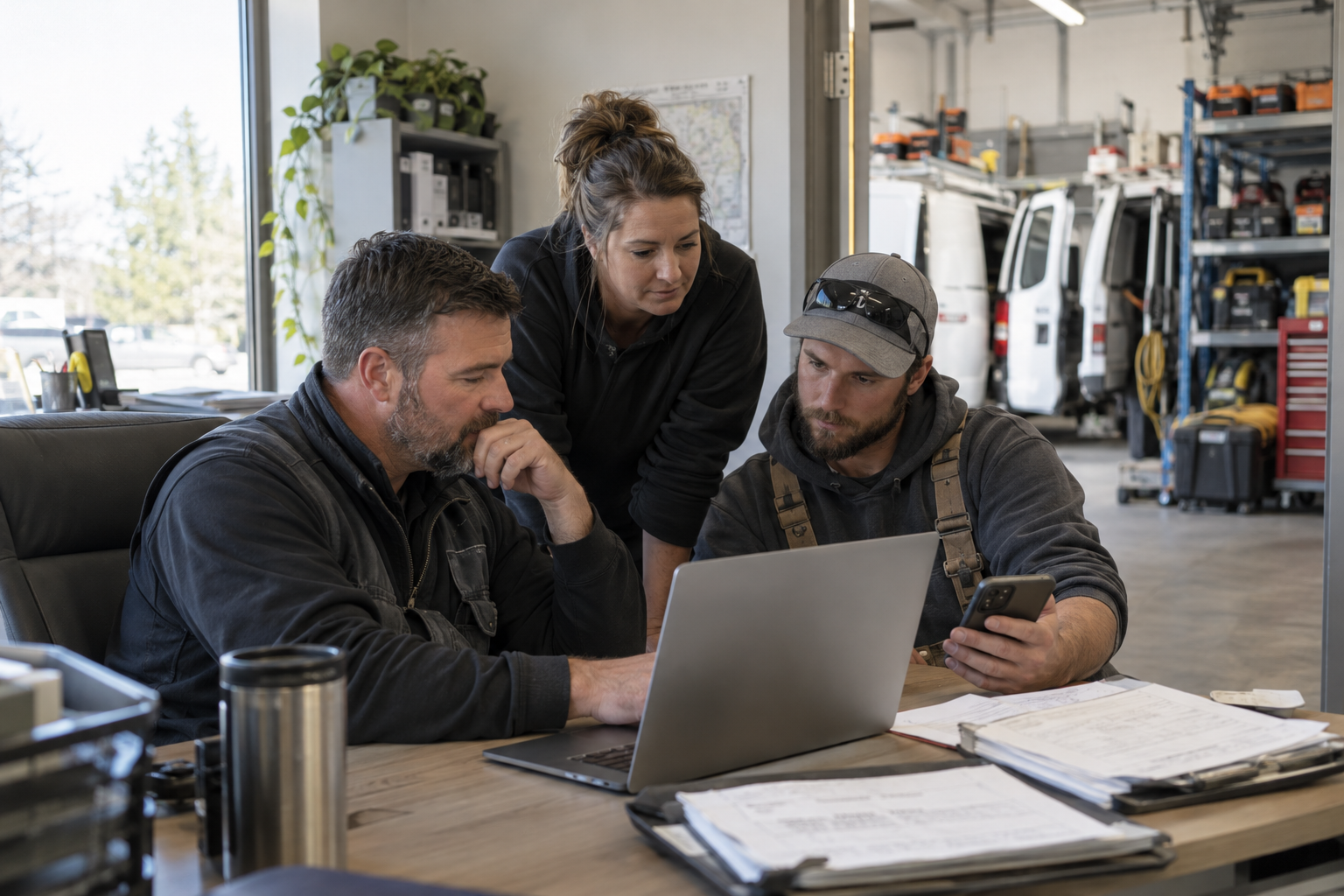
Your Team vs. Your Software: How to Finally Get Buy-In
Share this article
Contractors everywhere face the same two headaches. First, trying to get their team to adopt new software without the usual excuses, confusion, or pushback. Second, dealing with hidden idling costs that bleed thousands of dollars from the bottom line every year. The good news is that both problems are connected, and both can be fixed with the right strategy.
This guide breaks down how to build a culture of tech adoption inside your crew, reduce waste, speed up operations, and reclaim profit that slips away because of idling, delays, and outdated processes.
The Real Reason Software Adoption Fails
Contractors rarely struggle with technology because the tool is bad. The struggle usually comes from the gap between the field and the office. If the team thinks the new system is extra work, they will resist it. If they think it replaces something they already do, or worse, that it is being used to micromanage them, adoption goes downhill fast.
Here are the most common blockers that keep teams from using new software:
-
Lack of clear explanation about why the change matters
-
Fear of looking slow or inexperienced
-
Processes that feel complicated or time consuming
-
Zero involvement in choosing or testing the tool
-
A rollout that is rushed or confusing
-
No quick wins that show the value
You can solve these issues before they happen. The key is to make the team feel like the software is there to protect their time, reduce hassles, and help them get paid faster. When they understand what is in it for them, everything changes.
Step One: Explain the Why in a Way That Matters to Your Crew
People do not buy into software. They buy into reasons.
Instead of saying, “We are switching systems because the company needs better tracking,” try this:
-
“We are using this so nobody gets blamed for missing info.”
-
“We are rolling this out to reduce wasted trips.”
-
“This will help you get materials faster.”
-
“This will stop paperwork from sitting in trucks.”
-
“This keeps the schedule clear so you are not dealing with last minute chaos.”
The more personal the reason, the easier the adoption.
Step Two: Give Your Team a Role in the Process
Even if you have already chosen the software, involve your crew in how it is rolled out.
You can do this through:
-
A small pilot group
-
Field feedback sessions
-
A trial period where they can share what works and what slows them down
-
Asking them what information they want to see on their end
People support what they help build. When they feel like partners instead of employees being told what to do, resistance drops.
Step Three: Start With the Easiest Wins
Do not launch every feature at once. That is the fastest way to overwhelm people.
Instead, begin with the parts that save your team the most time on day one, such as:
-
Time tracking
-
Job updates
-
Site photos
-
Safety checklists
-
Daily logs
-
Task assignments
These are easy habits to build and they immediately show value. Once the team sees that the software removes headaches instead of adding them, they will be open to using the rest of the system.
Step Four: Keep Training Simple and Field Friendly
Your team does not want a classroom. They want quick, clear, hands on training.
Use:
-
10 minute walk through sessions
-
Short video clips
-
On site demonstrations
-
Step by step examples that match real jobs
-
One page cheat sheets
If the software requires long, complicated explanations, the rollout will crumble. Make everything as simple as possible.
Step Five: Celebrate the Wins and Reward the Behavior
Humans love reinforcement. If you want your team to adopt software, highlight improvements right away.
Call out things like:
-
Faster job completion times
-
Fewer back and forth calls
-
Fewer lost photos or receipts
-
Clearer communication
-
Better organization
A simple “This update saved us half an hour yesterday” goes a long way.
Small rewards also work well, like:
-
A free lunch for the crew that logs consistently
-
A weekly shoutout
-
Entry into a monthly draw
-
A pick of preferred shifts
You are not bribing anyone. You are reinforcing a new habit.
Now for the Part Most Contractors Ignore: How Idling Is Killing Your Bottom Line
Every contractor knows about downtime. But few realize how much money idling actually costs.
Idling is not just trucks running in a lot. Idling also refers to:
-
Crews standing around waiting for instructions
-
Delays caused by missing materials
-
Starting late because nobody knows the job details
-
Driving back to the shop for forgotten tools
-
Phone tag between field and office
-
Duplication of work because information was not recorded
These are the silent profit killers.
They do not show up as a line item on your financials, but they drain your business every day.
Let’s break down the hidden costs of idling.
1. Labor Waste
If three workers stand around for 20 minutes waiting for updated instructions or a missing material delivery, that is one full labor hour lost. Multiply that across a week, month, or entire year and the numbers get scary.
2. Fuel and Vehicle Wear
Actual truck idling burns fuel, wears engines, increases maintenance costs, and shortens the lifespan of vehicles. But the bigger cost is the wasted drive time caused by poor planning, lack of communication, or outdated scheduling processes.
3. Project Delays and Lost Revenue
Every delay affects timelines. When a project gets pushed back by a day or a week because of avoidable idling, that ripple effect hits every other scheduled job. This reduces capacity and lowers annual revenue.
4. Client Frustration
Slow communication and sloppy updates damage your reputation. That results in fewer referrals and lower close ratios. When customers feel uninformed, you lose trust and momentum.
5. Opportunity Loss
Every minute wasted on avoidable tasks could have been used to bid more jobs, upsell additional work, or complete projects faster. Idling does not just cost money. It costs opportunity.
Why Software Adoption Is the Cure for Idling
Most idling comes from one thing. Missing information.
The right software eliminates that by creating a single source of truth for your team. When everyone can instantly access:
-
Job details
-
Notes
-
Photos
-
Material lists
-
Schedules
-
Safety information
-
Updates
-
Task assignments
Then the idling disappears almost overnight.
There is no more guessing. No more unnecessary trips. No more waiting for the office to answer a call. No more confusion about priorities.
Clear information removes friction, and friction is the number one cause of wasted time.
How to Make Your Team See the Connection
Your team will adopt software faster if they understand how it ties directly to their daily job.
Show them that software will:
-
Reduce backtracking
-
Prevent rework
-
Make instructions easier to get
-
Give them the info they need before they arrive on site
-
Speed up communication
-
Reduce paperwork
-
Help them finish earlier
-
Keep their schedule predictable
When the crew benefits, the business benefits.
Build a Culture That Avoids Idling
You cannot eliminate idling once. You must build a culture that prevents it.
Here are the habits of high performing construction teams:
-
Daily updates are standard, not optional
-
Job details are reviewed before arriving on site
-
Time tracking is done consistently
-
Every material list is clear and complete
-
Problems get documented right away
-
Communication is simple and fast
-
The team uses one system instead of five separate tools
The more consistent the habits, the less waste your business has.
The Final Piece: Choose Software That Is Actually Field Friendly
You can have the perfect rollout plan, but if the software is not built for the field, your team will never adopt it.
Good software must be:
-
Fast
-
Mobile friendly
-
Easy to use
-
Clear
-
Reliable
-
Designed for contractors, not office staff
-
Able to replace multiple tools
-
Affordable for the long term
Your crew should be able to use it with dirty hands, spotty service, and tight timelines.
If they cannot use it in real job conditions, they will stop using it.
Your Team Adopts Software When They See It as a Tool, Not a Burden
Adoption is not about forcing your team to use something. It is about making their work easier.
When your crew realizes that software eliminates confusion, reduces idling, and protects their time, they adopt it naturally. They do it because it benefits them, not because someone told them to.
And when that happens, your business becomes faster, sharper, and more profitable.
Ready to keep track of your business from the beach?
Visit www.tradetraks.ca to see how trades companies are cutting costs, streamlining operations, and taking control of their future.

Frequently asked questions
Why do contractors struggle with new software adoption?
Contractors often struggle with software adoption due to a gap between field and office, where teams perceive new systems as extra work or micromanagement. Common blockers include unclear explanations, fear of looking slow, complicated processes, and a lack of team involvement. Addressing these issues early improves buy-in.
What are the hidden costs of idling in construction?
Hidden idling costs include wasted labor from waiting, fuel consumption and vehicle wear from unnecessary trips, and project delays impacting schedules. These also involve client frustration due to slow communication and lost opportunities from time wasted on avoidable tasks. Software can reduce these by providing clear information.
How can I get my construction crew to use new software?
To get your team to adopt new software, explain the benefits in personal terms that matter to them, like reducing wasted trips or getting materials faster. Involve them in the rollout through pilot groups or feedback sessions, and start with features that offer immediate time-saving wins.
What makes construction software field-friendly and easy to adopt?
Successful software adoption depends on a tool that is fast, mobile-friendly, and easy to use, even in challenging field conditions. It should be designed specifically for contractors, reliably replace multiple tools, and be affordable. The software must simplify work and not add burden.